Label blend
Grape seed · pine bark (Pycnogenol) · red wine extract · bilberry · citrus bioflavonoids — match these on the live listing.
Powder format
Measure → water → swirl → drink. Different from softgels; follow the live label for serving size.
Where to buy
Use the country-name buttons on this page or the how-to-buy guide. the distributor may receive compensation from eligible purchases.
Ingredient principle — label blend map

Educational label map — confirm wording on the live product page.
Technology — isotonic powder vs softgel

Format literacy for checkout confidence — follow the live label. No medical outcome promises.
How shoppers use this powder format

Why people research plant OPC antioxidants
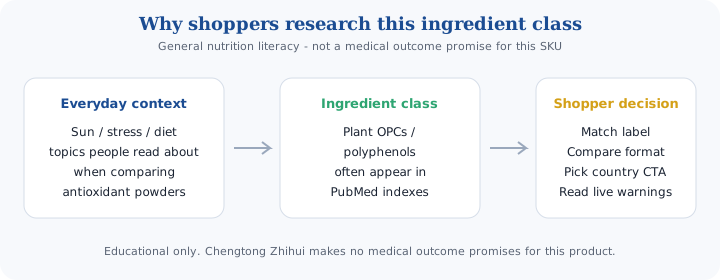
Ingredient-class literacy only — this SKU makes no medical outcome promises.
Updated shopping notes
Incorporating antioxidant support into your daily routine doesn’t have to be complicated. Isotonix OPC-3, a popular isotonic powder blend of oligomeric proanthocyanidins (OPCs), offers a convenient way to address oxidative stress through natural plant compounds. Below, we break down how to use it effectively in your lifestyle, with science-backed context and practical purchase guidance.
- Morning Boost
- Mix one serving (1 scoop or 3g) with water or your preferred beverage. The isotonic formula is designed for rapid absorption, making it ideal to pair with breakfast or a mid-morning snack.
- *Tip:* Combine with vitamin C-rich foods (e.g., oranges, bell peppers) to enhance bioavailability of OPCs.
- Evening Recovery
- Use OPC-3 as part of a post-dinner ritual to support circadian rhythm balance. Some users report pairing it with magnesium supplements for relaxation.
- Travel-Friendly
- The powder form avoids liquid restrictions for air travel. Store in a cool, dry place for up to 18 months (check expiration on packaging).
- Family Use
- The formulation is suitable for adults and children ages 4+. Adjust serving sizes for younger users as needed.
- Repurchase Planning
- Track inventory levels during peak seasons (e.g., cold/flu season) to avoid gaps in routine.
OPCs are polyphenolic compounds found in plant sources like grape seeds, pine bark, and citrus peels. They’re known for their free radical scavenging properties, which may help mitigate oxidative stress from environmental exposure, diet, and aging.
- Key Sources in OPC-3:
- Pycnogenol (pine bark extract) – Studied for vascular health and inflammation support.
- Grape Seed Extract – Contains procyanidins linked to antioxidant activity.
- Bilberry – May support eye health via anthocyanin compounds.
For quality assurance, the U.S. FDA emphasizes verifying third-party certifications (e.g., USP, NSF) for dietary supplements. While OPC-3 is not FDA-approved as a medical treatment, it adheres to current dietary supplement Good Manufacturing Practices (GMPs).
A: The recommended dosage is one serving daily. Consistency is key for maintaining antioxidant support, but avoid doubling doses to compensate for missed servings.
A: While generally well-tolerated, OPCs may interact with blood thinners or hypertension medications. Consult a healthcare provider if you’re on prescription drugs.
A: Yes – the isotonic formulation dissolves easily in water, tea, or juice without clumping.
-
Grape seed extract
Vitis vinifera seed extract
One of the OPC sources listed on the product page. Shoppers often compare using proanthocyanidin / OPC keywords—serving size and warnings always come from the live listing.
PubMed indexes oligomeric proanthocyanidins literature; we link it for further reading only—no outcome claims.
Related keywords: grape seed extract, grape seed OPC, proanthocyanidins, antioxidant powder
-
Pine bark extract (Pycnogenol)
Pinus pinaster bark extract
Listings often show pine bark extract alongside the Pycnogenol trademark. Match the English product name and Taiwan 愛尚它 naming on the live page to confirm the same SKU line.
The ingredient topic page links to independent research indexes; third-party sources discuss ingredient classes, not this product's effects.
Related keywords: Pycnogenol, pine bark extract, OPC-3, isotonic powder
-
Red wine extract
Red wine polyphenol extract
A plant-source item commonly listed in the blend. This page describes label wording only—we do not discuss alcohol or disease-related outcomes.
For ingredient comparisons, start at the OPC / Pycnogenol topic page, then return to the product cluster links.
Related keywords: red wine extract, polyphenols, plant blend
-
Bilberry
Vaccinium myrtillus fruit extract
A berry-source item on the label. Shoppers sometimes search bilberry alongside eye-health keywords—we help you match label language, not promise medical results.
Use the ingredient topic and label-facts pages for deeper reading; search trends are not guarantees.
Related keywords: bilberry, berry extract, Vaccinium myrtillus
-
Citrus bioflavonoids
Citrus bioflavonoid complex
Listed alongside the OPC blend on the product page. Useful if you want the full formula checklist before ordering.
Full research and certification context lives on the ingredient topic page (NIH / FDA / PubMed indexes).
Related keywords: bioflavonoids, citrus flavonoids, citrus bioflavonoid complex
Research & certification references
Third-party sources below discuss the OPC, proanthocyanidin, and pine bark extract (Pycnogenol) ingredient class— not this specific SKU, and they do not prove outcomes for this product. Always read the live product label.
Reference locale (EN): U.S. NIH, FDA, and PubMed. Traditional Chinese pages use Taiwan MOHW/TFDA/HPA; Japanese pages use MHLW/NIHN. Do not mix locales on one page.
Independent research
- PubMed — oligomeric proanthocyanidins (OPC) literature · NIH / NLM
- PubMed — Pycnogenol clinical studies index · NIH / NLM
- Pycnogenol — published research library · Horphag Research (ingredient sponsor)
Quality & certification context
- FDA — questions and answers on dietary supplements · U.S. FDA
- NSF — dietary supplement GMP certification overview · NSF International
Full ingredient report: OPC / Pycnogenol blend — ingredient topic · Nutrient angle: OPC blend & Pycnogenol shopping angle
Frequently asked questions
What main ingredients appear on the OPC-3 label?
Live listings commonly show grape seed, pine bark extract (Pycnogenol), red wine extract, bilberry, and citrus bioflavonoids. Always confirm the label at checkout.
How is an isotonic powder different from softgel antioxidants?
OPC-3 is an isotonic powder you mix with water—a different daily habit than swallowing softgels. Shoppers compare format and routine, not promised outcomes.
Which pages should I read before ordering?
Start with the ingredient topic (OPC / Pycnogenol), then the nutrient angle and label facts pages. Use the country-name buttons on this page or how to buy when you are ready.
Does this page make medical guarantees?
No. This is knowledge sharing plus quiet purchase link routing We describe label facts and shopping paths only; we do not promise health outcomes.
OPC-3 sits in the exclusive Isotonix house-brand line (Taiwan naming: 愛尚它). Shoppers compare it as an isotonic powder mixed with water — a different shopping job than softgels.
Product listings highlight a blend of grape seed, pine bark extract (Pycnogenol), red wine extract, bilberry, and citrus bioflavonoids. We describe what the listing shows; we do not promise disease outcomes.
Use the country-name buttons below when you are ready — the worldwide option ships to 200+ countries.
What shoppers usually compare
- Flagship exclusive Isotonix SKU with clear product links
- Isotonic powder format — mix with water per the live product page
- TW 愛尚它 listing + international listing both supported
- Cross-linked nutrient, label, routine, and how-to-buy angles
- Regional buy buttons: TW · US · HK · SG · MY · AU · CA · UK + Worldwide
Ready to order? Use the country-name buy buttons below.
Purchase link disclosure: This page contains purchase links to an independent distributor website. The distributor may receive compensation from eligible purchases, at no extra cost to you. This is not medical advice. Terms · Privacy
Supplement note: These statements have not been evaluated by the Food and Drug Administration. This product is not intended to diagnose, treat, cure, or prevent any disease. Lifestyle shopping content only. Not medical advice.